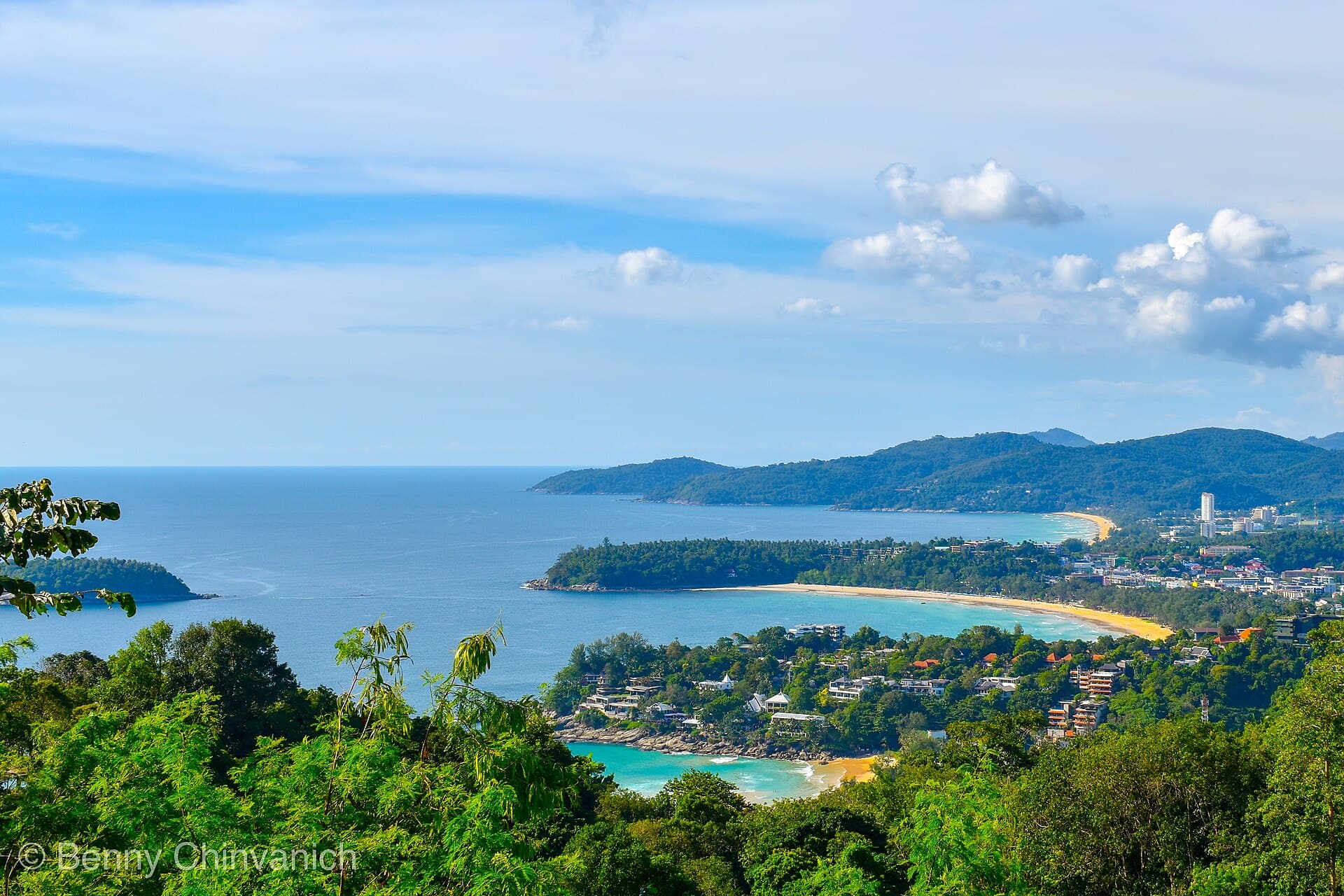
Phuket is Thailand’s largest island and its most developed beach destination — a province in its own right, with a city, an international airport and more than a million visitors in a busy month. It is not an undiscovered paradise, and it does not need to be: what it offers is range. In a single week you can have a quiet beach, a night out, a UNESCO-recognised food town and some of the most beautiful sea scenery in Asia.
The key decision is where to base yourself, because the island is too big to treat as one resort.
Phuket’s beaches by character
| Beach | Character | Best for | Watch out for |
|---|---|---|---|
| Patong | Busy, urban, loud at night | Nightlife, shopping, budget rooms | Crowds, touts, jet-ski disputes |
| Karon | Long, open, relaxed | Families, couples, space | Strong rip currents May–Oct |
| Kata & Kata Noi | Lively village, pretty bay | First-timers, surf beginners | Hilly streets; peak-season prices |
| Nai Harn & Ya Nui | Local, green, low-rise | Quiet stays, long-stayers | Need transport; rough in monsoon |
| Rawai | Working seafront | Seafood, boats to nearby islands | Not a swimming beach |
| Kamala | Village feel, gentle | Families, longer stays | Limited nightlife |
| Surin | Small, smart, clear water | Day visits, upmarket villas | Steep shore break |
| Bang Tao / Laguna | Resorts, beach clubs | Resort holidays, dining | Spread out; few budget options |
| Nai Yang | Shady, low-key, near airport | First or last nights, quiet | Some aircraft noise |
| Mai Khao | Long and empty | Seclusion, big resorts | Often unsafe for swimming |
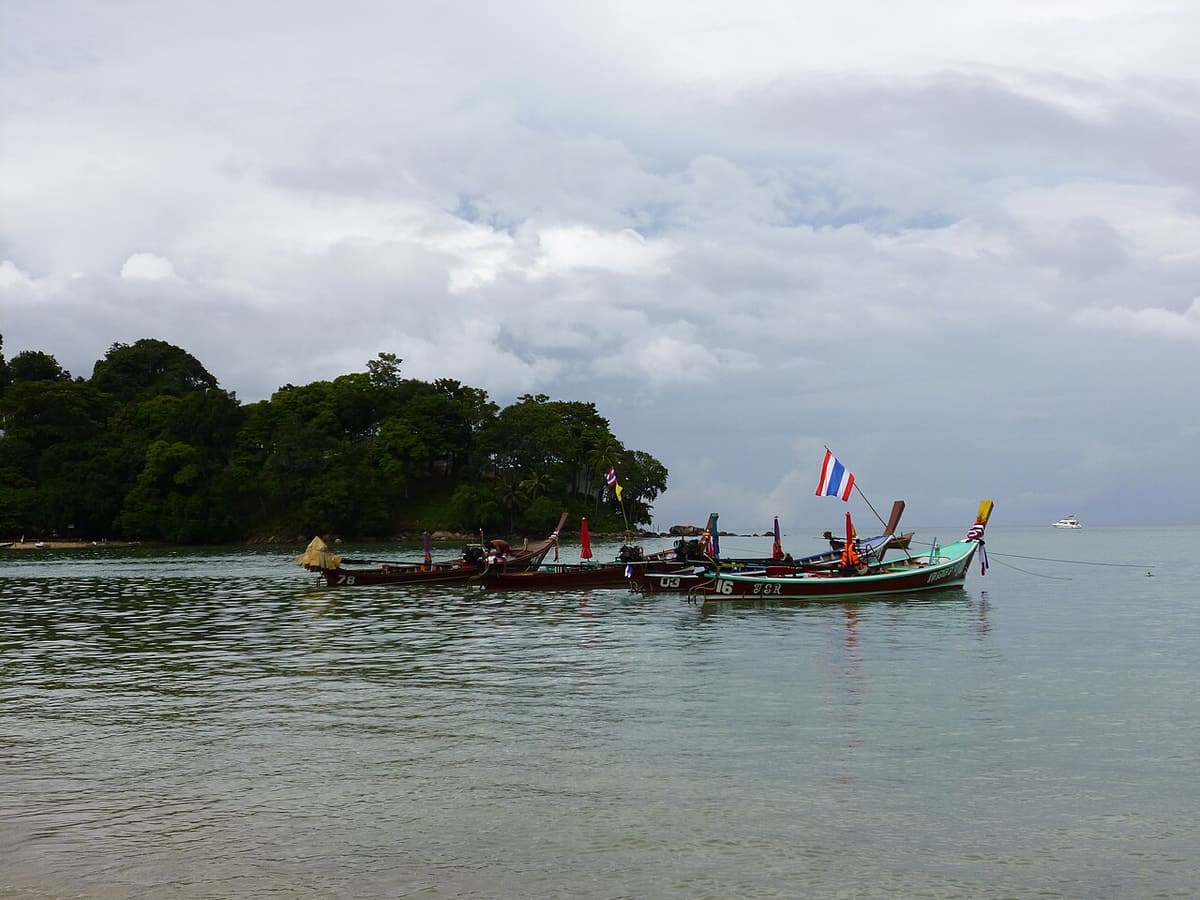 Beaches & where to base yourself
 Patong Beach
Phuket’s biggest, loudest and most convenient beach town
A three-kilometre bay on the west coast backed by a dense grid of hotels, malls, massage shops and bars. Bangla Road’s nightlife is here, and so is the island’s widest choice of rooms and tours.
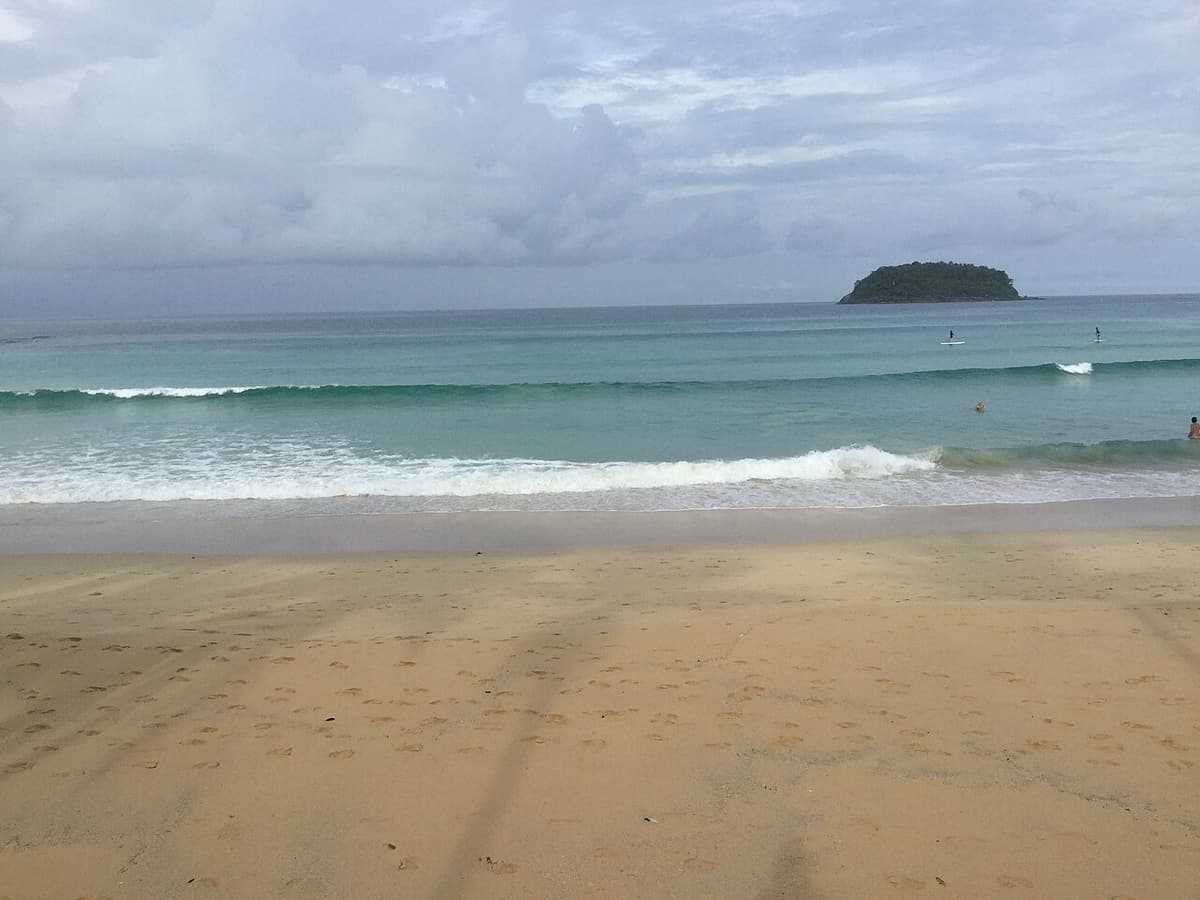 Beaches & where to base yourself
 Kata & Kata Noi
The all-rounder: good sand, good food, a little surf
Two neighbouring bays south of Karon. Kata is the island’s best balance of beach, restaurants and atmosphere, with small surf in the green season; Kata Noi, over the headland, is shorter and quieter.
 Sights on the island
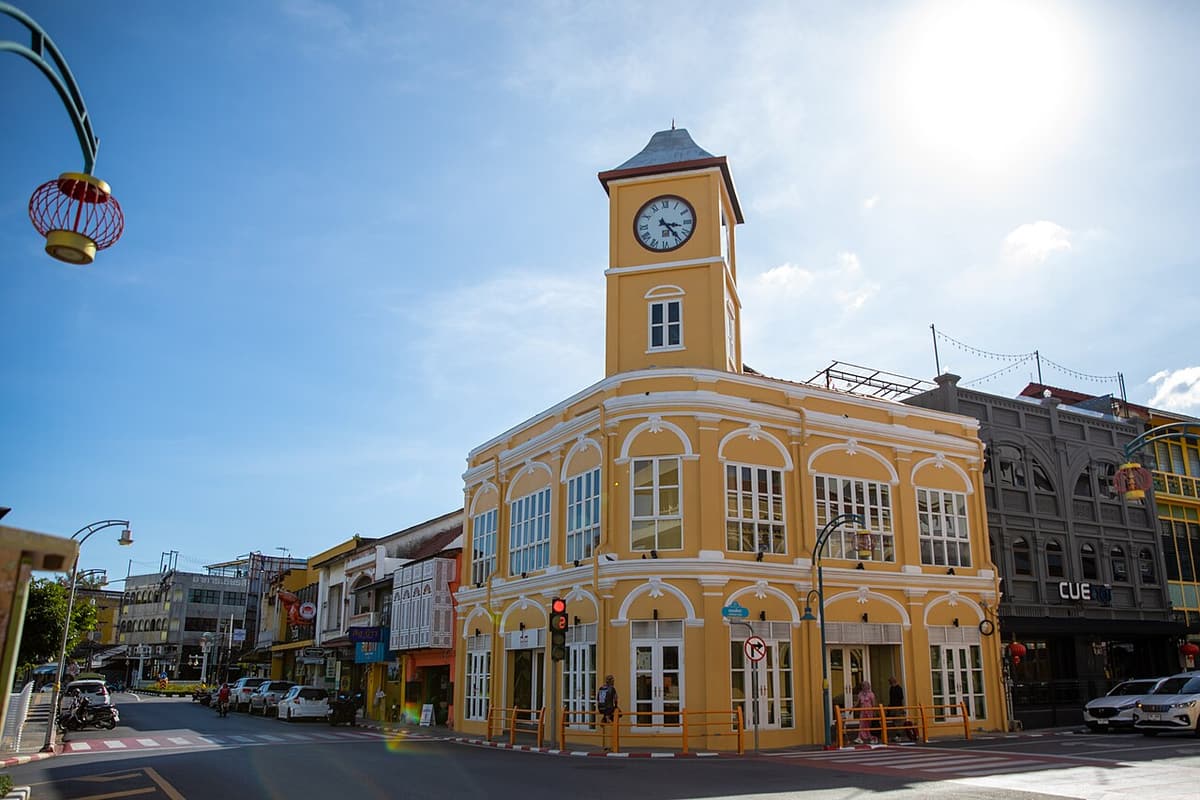
 Phuket Old Town
Pastel shophouses, Chinese shrines and the island’s best food
The historic core of Phuket Town, built on tin-mining wealth by Hokkien Chinese settlers. Its Sino-Portuguese shophouses on Thalang Road and Soi Romanee now hold cafés, museums and noodle shops, and Sunday brings a walking-street market.
 Sights on the island
 Big Buddha & Wat Chalong
The island’s two great Buddhist landmarks, a short drive apart
A 45-metre seated Buddha clad in white marble looks over the south of the island from Nakkerd Hill. Below it, Wat Chalong is Phuket’s largest and most revered temple. Most visitors see both in one outing.
Each beach has its own page under Beaches & Sights, and where to stay matches them with hotels.
The essential things to do
- A day at the Phi Phi Islands — Maya Bay, Pileh Lagoon and snorkelling. Guide.
- Sea-cave canoeing in Phang Nga Bay and a look at James Bond Island. Guide.
- Phuket Old Town — Sino-Portuguese shophouses on Thalang Road and Soi Romanee, and the Sunday walking street. Guide.
- The Big Buddha and Wat Chalong. Guide.
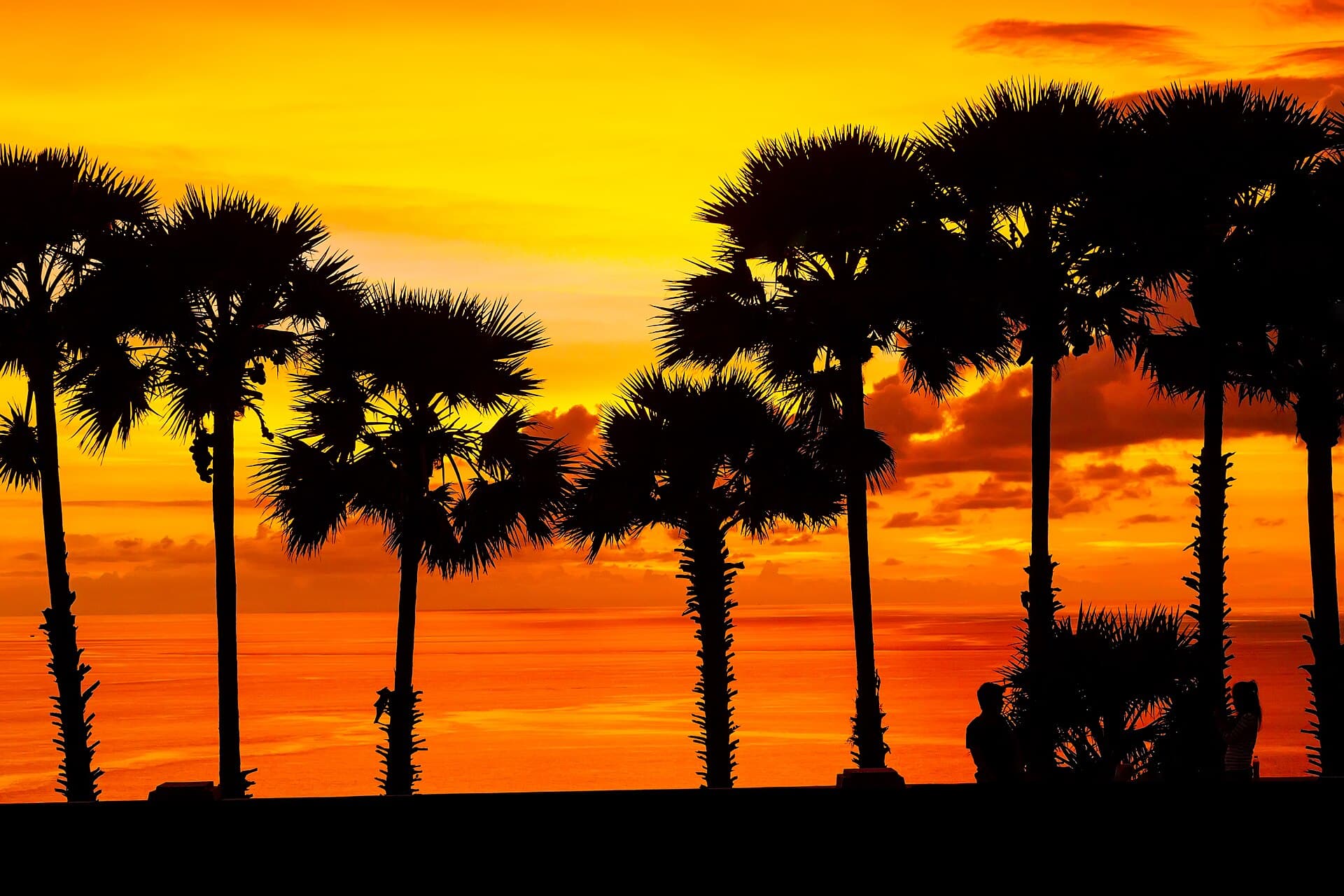
- Sunset at Promthep Cape, with the Windmill and Karon viewpoints on the way. Guide.
- The Similan Islands in the dry season, for the clearest water. Guide.
Nightlife and shows
Bangla Road in Patong is the centre of the island’s nightlife: a pedestrianised strip of bars, clubs and go-go venues that is busy from about 9 pm until late. Elsewhere, evenings are quieter — beach clubs at Bang Tao, cocktail bars in the Old Town, reggae bars at Kata and Rawai.
For a ticketed night out there are the big productions: Phuket FantaSea and Carnival Magic at Kamala, Simon Cabaret in Patong, and Muay Thai fight nights at the Patong and Bangla boxing stadiums several times a week.
Markets
- Sunday Walking Street (Lard Yai) — Thalang Road, Old Town, Sunday late afternoon and evening.
- Naka Weekend Market — the island’s biggest, on Saturday and Sunday evenings just outside Phuket Town: clothes, souvenirs and a large food section.
- Chillva Market — a younger, local night market north of the Old Town, open most evenings.
- Banzaan Fresh Market — behind Jungceylon mall in Patong, with a food court upstairs.
Elephants, ethically
Elephant riding and shows are still sold on Phuket, and we suggest avoiding both. Look for venues that keep elephants unchained in open space and limit contact. The strictest are observation-only — you watch from a walkway while the animals do as they please. “Sanctuary” is not a protected term, so read recent reviews and check what is actually included before booking. The two options we list are on the best tours page.
Muay Thai, cooking and other things to try
Besides watching a fight you can train: gyms around Chalong’s Soi Ta-iad, known as “fight street”, and in Patong sell drop-in sessions for beginners. Thai cooking classes usually start with a market visit and last half a day. Families rate the water parks — Andamanda near Kathu is the largest — and there is surfing at Kata and Kamala in the green season, golf at Laguna and elsewhere, and diving at Racha.
Festivals
- Vegetarian Festival — nine days in the ninth Chinese lunar month, usually late September or October. Phuket Town’s Chinese shrines stage processions with firecrackers and spirit mediums whose acts of self-piercing are not for the squeamish; the whole town eats meat-free food from stalls flying yellow flags.
- Songkran — Thai New Year, 13–15 April, celebrated with island-wide water fights.
- Loy Krathong — on the full moon of the twelfth lunar month, usually November, when candle-lit floats are launched on water.
- Chinese New Year and the Old Town Festival — late January or February.
Food
Phuket’s cooking is its own: southern Thai heat mixed with Hokkien Chinese and Malay influences, recognised when UNESCO named Phuket a Creative City of Gastronomy in 2015. In the Old Town try Hokkien mee, dim sum for breakfast, moo hong (sweet braised pork), crab curry with rice noodles and the iced dessert oh-aew. On the coast, eat grilled seafood at Rawai or Nai Yang with your feet in the sand.
Money and costs
The currency is the Thai baht. ATMs are everywhere and charge foreign cards a fee per withdrawal (typically 220–250 baht), so take out larger amounts less often. Cards are accepted at hotels, malls and larger restaurants; markets, songthaews and small shops are cash. Phuket is the most expensive part of Thailand — expect transport and beachfront dining in particular to cost more than elsewhere in the country. Tipping is not obligatory; rounding up or leaving small change is appreciated.
Safety and health
- The sea: from May to October the west coast has strong surf and rip currents. A red flag means do not enter the water. People drown every year ignoring this.
- The roads: traffic accidents are the main cause of serious injury to visitors. See our scooter warnings.
- Scams: the classics are jet-ski damage claims in Patong, taxi overcharging and tuk-tuk “shopping stops”. Agree prices first and walk away from pressure.
- Sun and heat: the sun is fierce all year. Use high-factor, reef-safe sunscreen and drink plenty of water. Do not drink tap water.
- Hospitals: Phuket has several international-standard private hospitals. They are expensive without insurance.
- The law: e-cigarettes and vapes are illegal in Thailand, and penalties for drugs are severe.
Entry rules
Citizens of many countries can enter Thailand without a visa for tourism; the permitted length of stay has changed more than once in recent years, so check the rule for your passport before you fly. Since 1 May 2025 foreign arrivals have also been required to complete the Thailand Digital Arrival Card (TDAC) online in the three days before arrival. It is free on the official immigration website — beware of look-alike sites that charge a fee. Your passport should normally be valid for at least six months.
Temple and local etiquette
- At temples and the Big Buddha, cover shoulders and knees and take off your shoes before entering buildings.
- Do not touch people on the head or point your feet at Buddha images.
- Swimwear belongs on the beach — cover up in shops, restaurants and villages, particularly in Muslim communities such as Kamala and Koh Yao.
- Treat images of the royal family with respect.
What to pack
Light clothing, a cover-up for temples, sandals that slip on and off, a dry bag for boat trips, a light rain jacket from May to October, mosquito repellent for evenings, and seasickness tablets if you are prone. Thailand uses 220 V with sockets that take both flat and round two-pin plugs.
Sample itineraries
Three days
- Day 1: beach, then Karon Viewpoint and sunset at Promthep Cape.
- Day 2: Phi Phi Islands and Maya Bay by boat.
- Day 3: Big Buddha and Wat Chalong in the morning, Old Town in the late afternoon and evening.
Five days
Add a day in Phang Nga Bay with sea-cave canoeing, and a slow day on a second beach — Nai Harn if you are in the south, Bang Tao or Surin if you are further north — ending with a show or Muay Thai.
A week
Add the Similan Islands (in season) or Racha Yai, an elephant sanctuary or cooking class, and either a night on Cheow Lan Lake in Khao Sok or a day on Koh Yao Noi. With more time, take the speedboat on to Krabi.